Friday, July 18, 2014

Elizabeth Bathory: The Blood Countess

Niece of the king of Poland and cousin of the prince of Transylvania, Elizabeth Bathory (or Erzebet Bathory, if you're especially hip in da vernacular) was a countess in Hungary in the late 1500s and early 1600s. She would become one of the most prolific female serial killers the world has ever known, torturing and murdering 650 girls and young women.

Perhaps the root of all her later crimes was planted in her childhood, which was less than ideal by both modern and medieval standards. Historians often agree that she suffered from "fits- even outbursts- of rage." Contemporary accounts often describe epilepsy-like symptoms, including severe seizures. In addition, the parenting techniques she was subjected to were often...unconventional? For example, rather than just telling their daughter that stealing is wrong, her parents forced Elizabeth to witness a young thief's fate- being sewn into the stomach of a dying horse and left to perish. That's how you teach life lessons to your kids, folks.

Elizabeth married a soldier named Ferencz Nadasdy at the age of 15. He was gone often, either studying in Vienna or gone at war. Most agree that Elizabeth committed the majority of her crimes in his absence, but he was far from ignorant of her deeds. Some legends claim that he went so far as to teach her new torture techniques he'd learned abroad. Both Elizabeth and her husband enjoyed having power and thrived in an environment with no accountability for aristocrats (Hungary is usually on point with that kind of thing). They ended up with four kids, all of whom fled the nest and married at early ages. Who can blame them? 


Most accounts say that Elizabeth was an incredibly vain narcissist. According to her contemporaries, she changed clothes at least five or six times a day and spent hours admiring herself in the mirror. She used a number of unusual oils and techniques to both preserve and lighten her skin. Her ladies-in-waiting were fired (or disappeared altogether) if they did not give her continuous praise.

Initially, Elizabeth lured young peasant girls to her castle, promising employment. However, what awaited them was nightmarish. 

The most common atrocities committed against these young women included severe beatings, burning limbs, mutilation, biting the flesh off the faces, arms, etc. of the young girls, freezing to death, and starving to death.

However, certain tactics were more unusual. One reported torture technique described spreading honey over a naked girl and leaving her tied outside for bugs to eat and bees to sting. Elizabeth also perfected the art of freezing a girl to death during the winter by pouring water over her naked body until it eventually solidified, creating a tomb of ice around the victim. However, according to most reports, the torture Elizabeth loved most was beating the girls to the brink of death. 

Details from her trial revealed that her crimes grew worse as she aged, especially after the death of her husband. Firsthand accounts add that she would sew a servant girl's mouth shut, force her to eat strips of her own flesh, and burn her genitals until she died of pain. It was also common for Elizabeth to line her carriage seats with needles to poke her guests. When she was ill, one account states that she "bit a person who came near her sick bed as though she were a wild beast."

Until 1609, Elizabeth's main assistant was Anna Darvulia; after her untimely death, a widow named Erzsi Majorova replaced her. The point is that Elizabeth was not alone in committing these crimes; she had a myriad of accomplices and witnesses who both saw and approved of her actions.

Ever-dedicated to her beauty, Elizabeth believed that bathing in the blood of virgins would preserve and whiten her skin. Her accomplices would drain the blood of her victims (at times, when they were still alive) into a giant tub. Some sources claim that she bathed in blood at least once a day. 


A modern re-creation of Elizabeth's torture techniques/daily bath. 


I'd like to point out that I did not make this meme. I'm not that morbid. Yet.

However, once the once-plentiful stock of peasant girls had run out, Elizabeth expanded her sights to the lesser gentry. She opened a fake school of etiquette for daughters of lesser nobles, promising to teach them the ways of court. Instead, once these young ladies entered the castle, they never returned home. Naturally, the lords and ladies of the area noticed. This was Elizabeth's mistake. She had grown too bold and too arrogant after years of getting away with her crimes. 

The official inquiry regarding her actions began in 1610. The prosecution was supported by the crown- not due to the atrocity of her actions- but because the king hoped to escape paying back a rather extensive loan to her family. If Elizabeth was arrested, the king would be exempt from paying back the loan and would gain all of Elizabeth's land holdings. 

On December 19, 1610, Elizabeth was arrested and placed on trial. She was convicted, her lands confiscated, and her castle searched extensively. A registrar retrieved from the castle contained a record of the names and ages of all of Elizabeth's victims in her own handwriting. The death count came to a monstrous total- 650 victims. 

Elizabeth's known accomplices were executed, but she received a punishment worse than death- immurement. She was walled into her room in Čachtice (Csejte) Castle with only small slits left open to pass food and provide ventilation. She was trapped there until her death in 1614. 
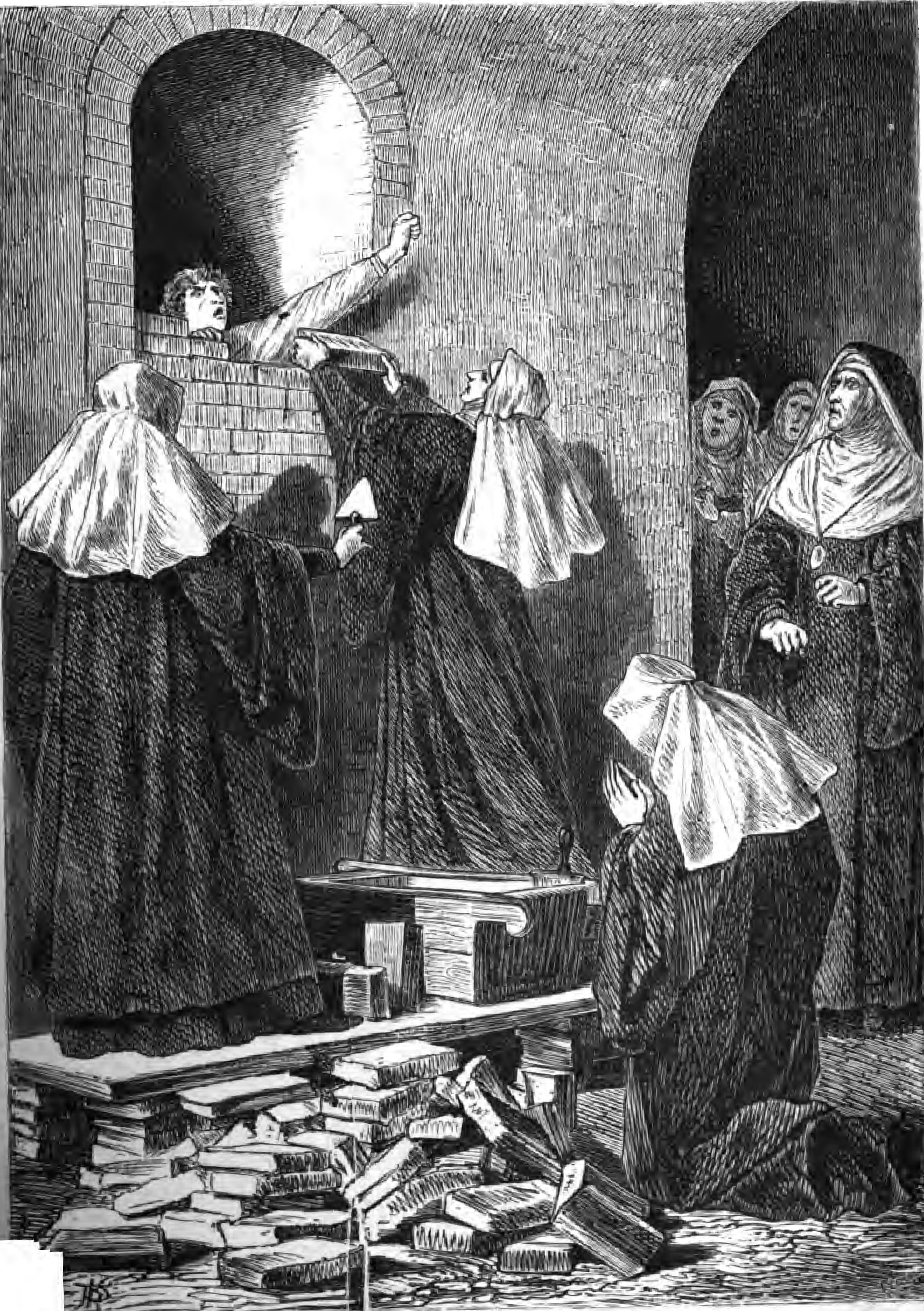

You get the picture. 

She was initially buried in the cemetery of the local church, but the local uproar over the burial of the hated "Tigress of Csejte" caused her body to be moved to her childhood home at the castle of Ecsed, where it remains at the Bathory family crypt. 


The ruins of Čachtice (Csejte) Castle still overlook the village from which Elizabeth plucked her victims. 

Elizabeth is often referred to as the Blood Countess or Countess Dracula. Even to this day, locals of the area refuse to speak of her, often citing the possibility of black magic as reasoning for their fear. 

Most legends of Transylvanian vampirism stem from the crimes of Elizabeth Bathory and her relative, Vlad the Impaler (big shocker there). Movies, books, and songs have been created over the centuries that reference her cruelty. An opera (yes, a freaking OPERA), aptly named "Erzebet: The Opera," was composed by Dennis Bathory-Kitsz in 2011 in remembrance of his distant female relative. The legacy of the Blood Countess lives on, continuing to haunt our hearts and minds today.

Moral of the story: if a creepy lady with blood on her hands asks you to be a lady-in-waiting, the answer is always a prompt, "Thanks but no thanks."

Wednesday, July 16, 2014

Diane de Poitiers: Mistress and Cougar

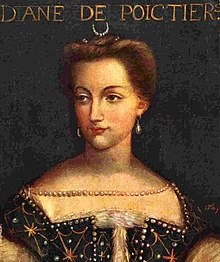
Unbelievably gorgeous, determined, and intelligent, Diane de Poiters held the heart and mind of King Henri II of France until his death in 1559.
So, the question must be posed- how did she (a woman twenty years his senior) manage to secure and maintain influence over one of the most powerful men in Europe for decades? 

Diane was lucky; she was born in an age in which it was fashionable to have girls educated in the same manner as boys. She was taught Latin, Greek, dancing, conversation, etc. What's important to remember is that her education was not tailored for practicality; it was tailored for her survival and success in court. And succeed she did.

At the age of 15, she married a pretty nice, reasonably rich French guy named Louis de Brézé. Keep in mind that this dude was 39 years older than her. Sick. She ended up having two daughters with him before his death in 1531. After his death, she wore exclusively black and white for the rest of her life. These colors also referenced her name, derived from Diana, the hot Roman goddess of the moon. Was she in mourning, or was she patenting her personal trademark? Perhaps both. 

Here, the creepiness begins to set in. King Francis I asked her to become his son's mentor. Since his mother was already dead, the 10-year-old boy, Henri II, grew to love Diane... in a way that remains confusing for many. She served as a mother figure to him, teaching him courtly manners and other necessary skills for a future king of France. Soon enough, the skill set he required expanded to sexual matters, and she taught him that, too. So yeah, cougar. 


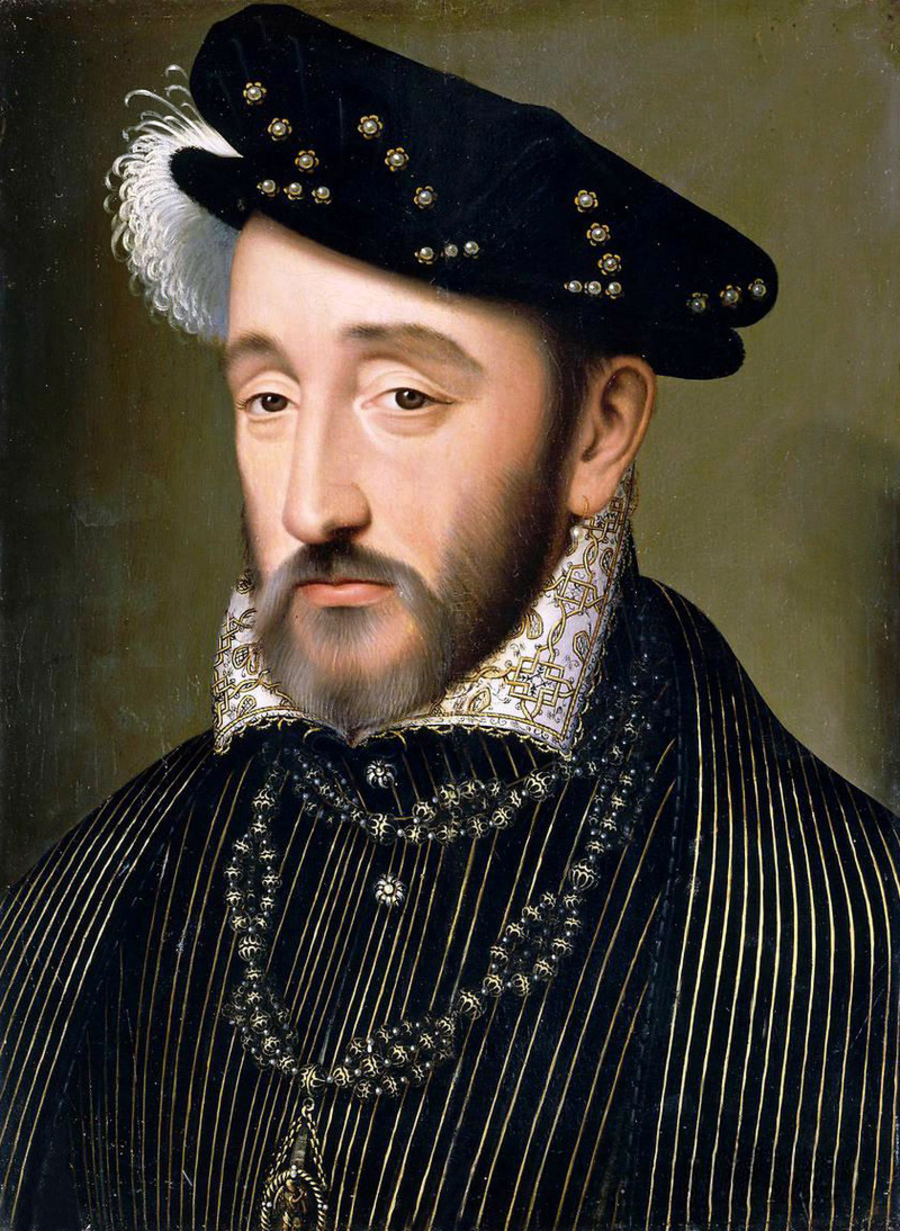
The evolution of Henri II (and his facial hair). 

In 1533, Henri II married Catherine de Medici. Catherine was a sassy and slightly malicious Italian chick who made no secret of her hatred towards Diane. This was an especially awkward situation because Catherine and Diane were actually distant cousins, and Catherine's hatred of Diane was one-sided. Diane actually saw Catherine as a cute, slightly malevolent baby cousin. She even made sure that Henri made enough stops in Catherine's bedroom to ensure the possibility of a royal heir and nursed the new queen back to health when she caught scarlet fever. Despite Diane's attempts to hook up the king and his new queen, it took years for Catherine to conceive a child. These attempts at taking the higher moral ground only made Henri more attracted to Diane, which made the problem even worse. Catherine thanked her for her efforts by trying to poison her. Diane literally ran Henri's life (not in a selfish way, but in a "Hey-I-love-you-and-I-know-what's-best-for-you-because-I-practically-raised-you-and-am-literally-twenty-years-older-than-you" kind of way). 

Another thing that made the situation worse was that Diane was absolutely beautiful despite her age. She aged exceptionally well, and- even into her fifties and sixties- she was still considered the most beautiful woman in France. 


She had several ways of maintaining her beauty throughout her life, including taking daily baths (gasp!), immersing her face in icy water to aid her luminous complexion, sticking to a specific diet, and exercising daily (heaven forbid). She also had some rather unusual ways of maintaining her beauty that were revealed when her body was exhumed in 2009. Scientists found her body's gold levels to be 500 times the normal levels, proving the rumors that she had experimented with drinking liquid gold as a beauty elixir. In a way, this elixir did work in giving her a porcelain complexion, but the anemia it caused also helped kill her in the end. 

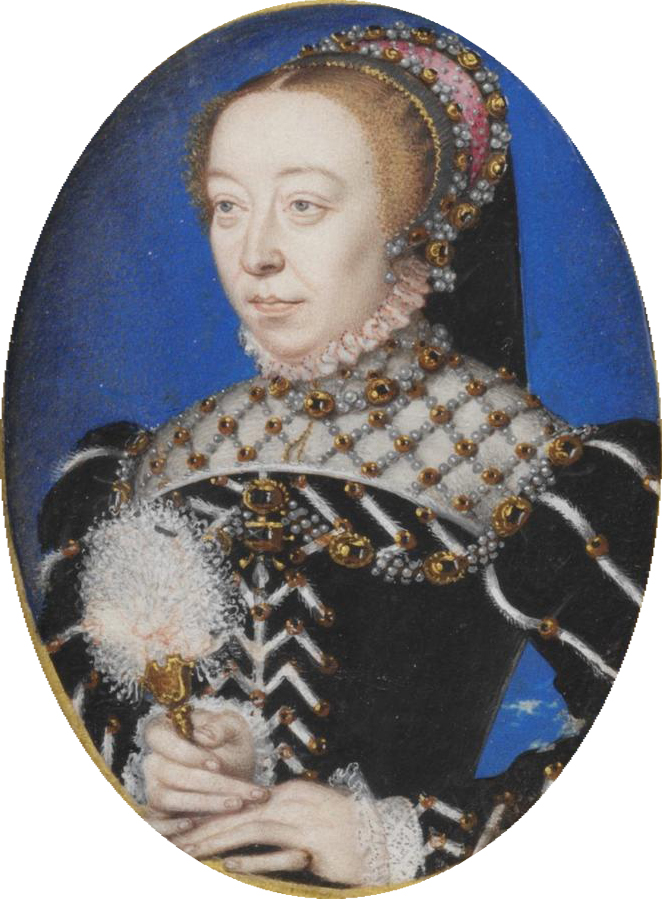
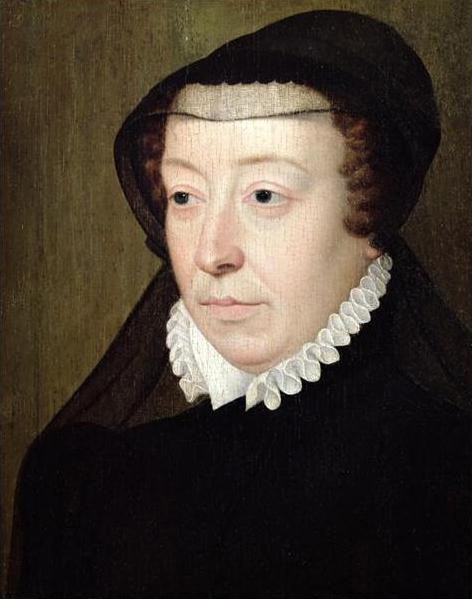
In contrast, Catherine de Medici was....not quite up to par in the eyes of her contemporaries. 

She didn't have that great of a personality either. For whatever reason, hiring her own poison-maker wasn't conducive to making friends in the French court.


I mean, is there a comparison? Really? 

So yeah, it ticked Catherine off a little when her husband was absolutely entranced with woman who was more beautiful, more intelligent, and more politically savvy than she could ever hope to be. It only made matters worse when the queen found out that the king's favorite mistress (Diane) was twenty years older than her, and she still didn't have a chance.

So, while Catherine was queen of France in name, it was Diane who held all the power of the queen. It was Diane who held the crown jewels, it was Diane who was in charge of the education of Henri's children (even those born of Catherine), and it was Diane who was allowed to write and sign official political documents under the signature 'HenriDiane' (so yeah, basically the Renaissance version of Kimye). She was politically brilliant, and much of the success of Henri's reign is attributed to her influence. 

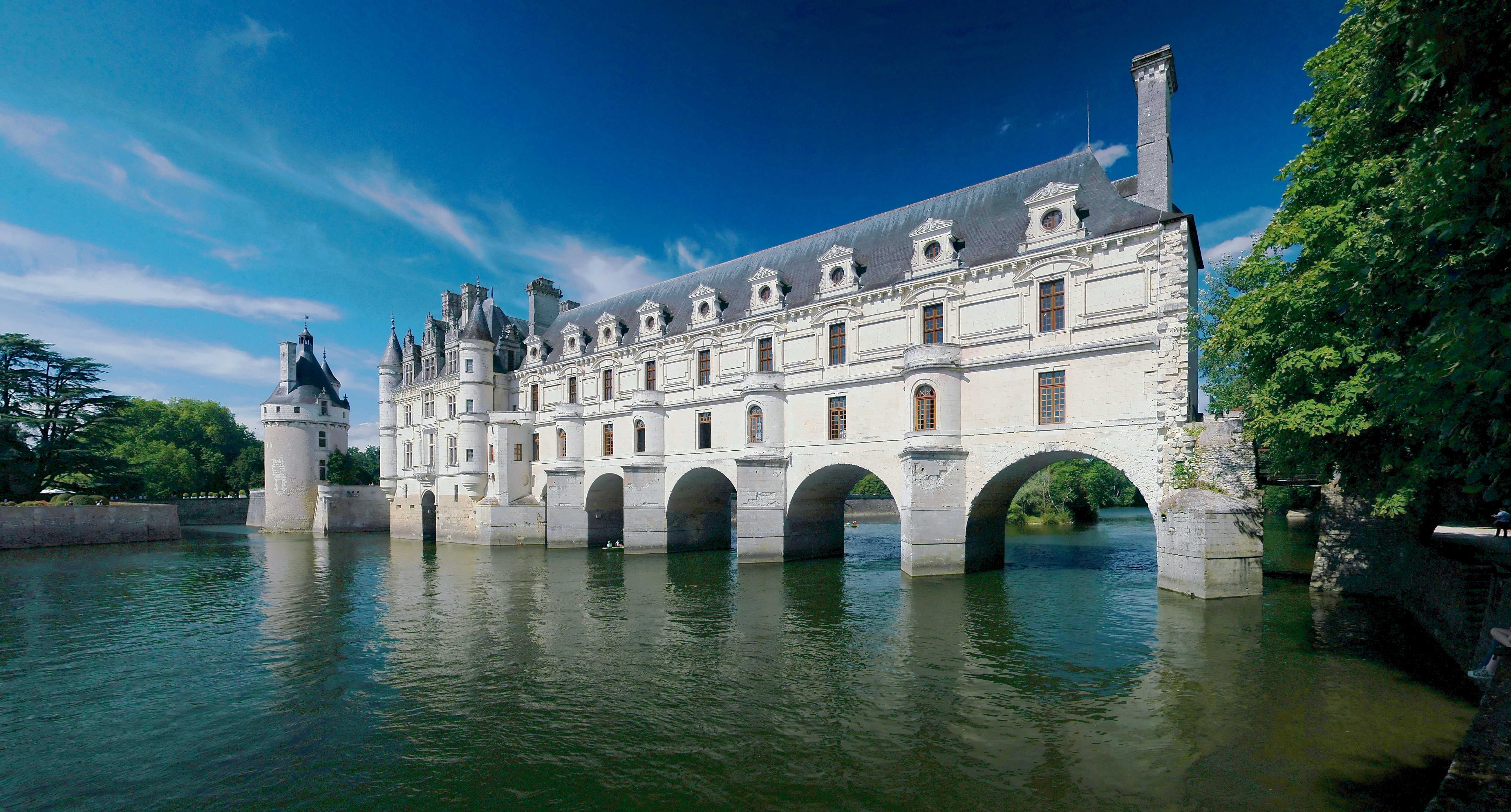
Henri gave her lots of nice things throughout her life, including the aforementioned crown jewels and many castles (including the amazingly gorgeous Chenonceau, pictured below).


After Henri's death (he was fatally injured during a joust), Catherine finally had the opportunity to banish Diane from court. Diane lived the rest of her life in one of her country estates at Chaumont, and she died at the chateau d'Anet at the age of 66. 


Not a bad place to croak, eh?

Tuesday, July 15, 2014

Elizabeth I: Ginger and Proud (1533–1603)


Ah, Elizabeth I. Being a fellow ginger, I hold you in especially high regard.

Daughter of Queen Anne Boleyn (known as "Great Whore") and King Henry VIII (the greedy ginger dude who went through six wives), Elizabeth's childhood- as well as her very existence- was tenuous and wavering. Her mother's fall from favor and death (by a French swordsman, no less) left her with a stigma that would follow her throughout her life.

At the age of two, the toddler was declared a royal bastard and sent off to live in the English countryside with her own household. She was educated very well and turned out to be one smart cookie. From a very early age, she was taught Latin, Greek, Spanish French, philosophy, history, and mathematics (humanist education, y'all). One of her tutors, Robert Ascham, considered her the brightest student he'd ever encountered. She was also a skilled poet and composer, played several musical instruments, created art, and was a complete boss at needlework.  She went through periods of being legitimized and illegitimized, whichever status better suited her father politically at the time. These fluctuations didn't really affect her day-to-day life aside from slight adjustments in allowance and appearances at court, but they definitely took their toll on her self-esteem and relationship with her ever-volatile father. Luckily, she was one of those remarkably rare people that didn't shrink from adversity and made the conscious decision to figure out how she could use it to her advantage. In short, she was a complete boss, and she will always be my #wcw.

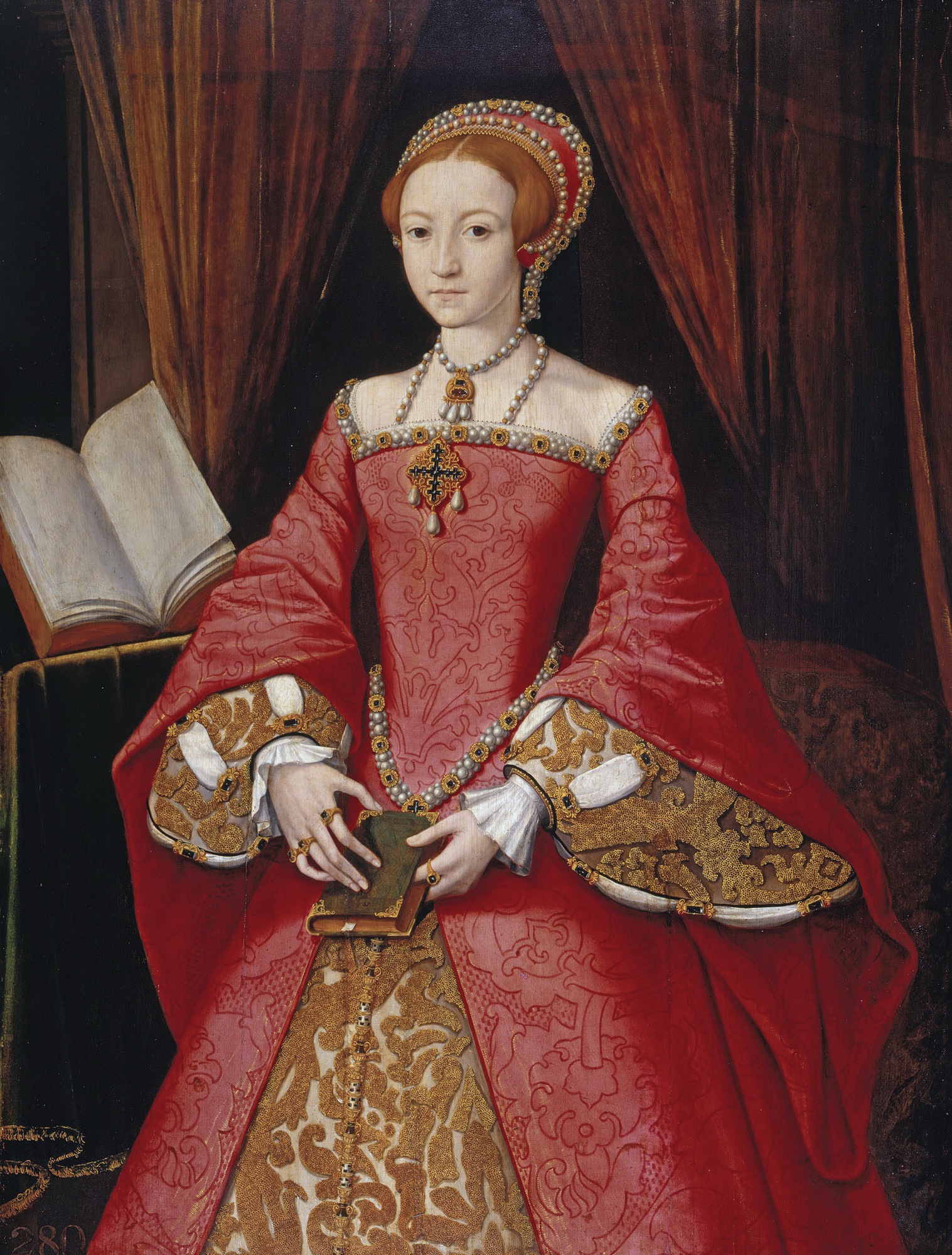
Like bell-bottoms, but for the arms.

Elizabeth grew up Protestant, mostly to please her father who broke off from the Catholic Church so he could get hitched with Anne Boleyn. This became a serious issue after the death of her younger brother Edward VI, who had become king after the death of their father (one of the greatest jerk-wads in history), Henry VIII. Since the Tudor line had run out of legitimate male heirs (and beheaded the next semi-legitimate heir, Lady Jane Grey, after 9 days as queen), Elizabeth's older, super-mega-ultra Catholic sister named Mary took the throne. Now, I'd like to point out that there's nothing wrong with being Catholic; I'm a Catholic myself and pretty dang proud of it. However, she subscribed to militant Catholicism (much like her future husband, Philip III of Spain). Because of this, she grew incredibly paranoid that her sister would lead a Protestant uprising against her and treated Elizabeth incredibly cruelly as a result, nearly killing her at certain points. There'll be another blog post about Mary later, so you'll hear all about her insanity and how she thought she was preggo and ended up dying instead. Whoops. Anyways, all that's important for now is that she killed a lot of people, everyone hated her, and eventually she died- at which point Elizabeth FINALLY took the throne.


Just look at that ermine trim. So regal. So fab.

Elizabeth became known as the Virgin Queen because- after her coronation- she pretty much told her advisors to shove it when they told her she needed a husband. HOWEVER, this is not to say that she wasn't attracted to the menfolk (gah, the word "menfolk" should totally be used more often). In fact, she was in love (*cue third-grade me screaming, "She's in looooooooooooooove"*) with her best friend from childhood, Robert "Robin" Dudley. However, their marriage wasn't politically possible, even though she promoted him to Master of the Horse (hey, at least it's not Master of the Toilet- which actually existed AS A COVETED POSITION) and gave him the title of Earl of Leicester.


A match made in heaven, right? #sorrynotsorry


Robert ended up marrying some blonde named Amy, who was known as being nice but incredibly bland. They rarely saw each other, and she reportedly developed something resembling breast cancer a couple years into their marriage. However, she didn't die from this cancer-like issue; rather, she was found at the bottom of a tall staircase with a broken neck and two wounds to the head. The coroner found it to be an accident, but most considered (and continue to consider) her death to be either arranged murder or suicide.

Since Robert and Elizabeth still couldn't (or wouldn't, since she flat-out refused any and all suitors) marry, he eventually remarried a young woman (11 years younger than him) named Lettice Knollys. She remarkably resembled Elizabeth, which didn't escape the queen's notice. And yes, by "remarkably resembled," I mean that they both had flaming red hair and looked nice in poofy dresses. The queen hated her- most likely out of jealousy- and made her appearance at court a rare occasion.

Her reign was one of the most politically, economically, and militarily successful periods England has ever experienced. She finally created a compromise between the polarized Catholics and Protestants in England, established incredibly profitable voyages of discovery to America and India, and defeated the supposedly unbeatable Spanish Armada (of course, the storm that prevented the cray-cray Spaniards from attacking may have helped a bit). She defied all odds and became one of the greatest monarchs of ever. And as a single woman, no less. Heck, her rule even inspired new terms for the period- the Elizabethan Era, the Golden Age of England, etc. So yeah, she's a total boss.


She also had some pretty rad currency.